
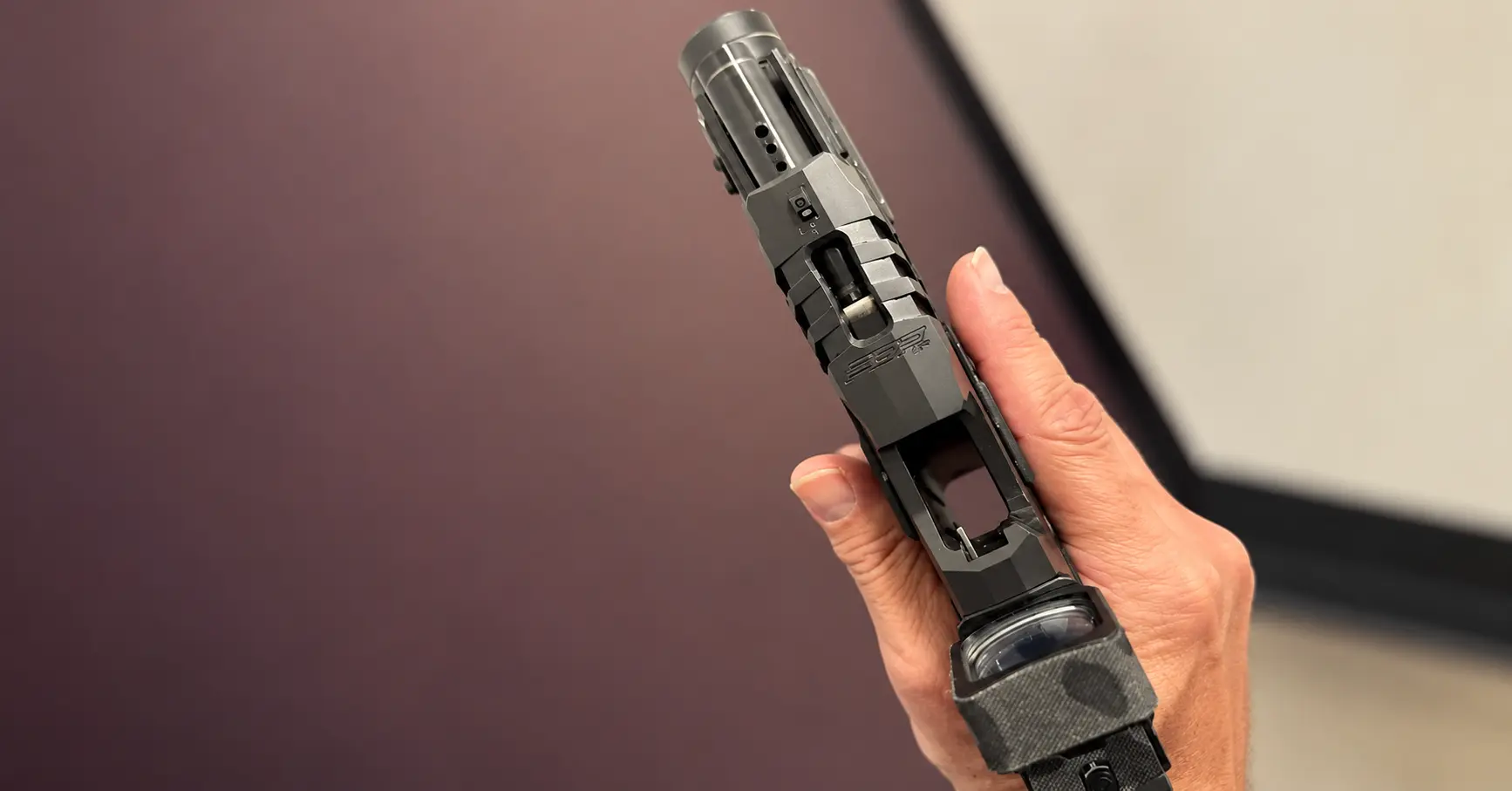
Trigger discipline comes down to one rule: keep your finger off the trigger until your sights are on the target and you have decided to shoot.
It sounds easy. In practice it takes work, because the habit has to hold when you are nervous, moving or tired. This post explains what trigger discipline means, why it matters, the mistakes that break it, and how to build it into everything you do with a firearm.
What Is Trigger Discipline?
Trigger discipline is the habit of keeping your finger off the trigger unless you are actually ready to fire. Your finger stays straight along the frame or on the slide, away from the trigger, until the moment you choose to shoot.
The trigger is for firing and nothing else, so don't use it to rest your finger or steady your grip.
Why It Matters
A firearm fires when the trigger is pressed. It does not matter whether you meant to press it. If your finger is on the trigger when you are startled, trip or lose your balance, your hand can tighten on its own, and the gun can fire.
Keeping your finger straight and off the trigger gives you a simple margin of safety. If something goes wrong, the gun is much less likely to fire when your finger is not on the trigger.
Where to Keep Your Finger
Straight along the frame or on the slide. Not curled, not tucked inside the trigger guard, and not resting on the trigger.
Never rest it on the trigger guard either. When you are startled, your hand can tighten on its own. That is the sympathetic reflex, and a finger sitting on the guard can slip onto the trigger when it happens.
Make it a position your hand knows. Pick up a handgun that you have checked is unloaded and notice where your finger goes. If it drifts toward the trigger, correct it every time until straight becomes the default.
When Your Finger Goes on the Trigger
Your finger touches the trigger only when all of these are true:
- Your sights are on the target.
- You are sure of your target, and you know what is behind it, in front of it and around it.
- You have decided to shoot.
If any of those changes, your finger comes off the trigger and goes back along the frame. That includes the moment after the last shot you meant to fire.
Common Mistakes
These are the habits to watch for:
- Finger inside the trigger guard while drawing or holstering.
- Resting the finger on the trigger while you move, turn, scan or step.
- Keeping the finger on the trigger while you reload or clear a malfunction.
- Putting the finger on the trigger as soon as you pick up the gun, before you have a target.
- Letting the finger drift onto the trigger when you are startled or stressed.
With new shooters, we see all of these in class except the last one.
How to Build the Habit
Trigger discipline becomes automatic through repetition. Here are a few ways to work on it:
- Check your finger at every step. When you draw, aim, move, reload and holster, confirm where it is.
- Practice deliberately. A deliberate, correct movement is worth more than a fast, sloppy one.
- Use dry fire practice, and do it safely. Clear your gun, remove all live ammunition from the dry fire area, then clear your gun again. Practice keeping your finger along the frame until your sights are on target. When you are done, put the target away, say out loud, "this session is over," and leave the area.
- Ask an instructor to watch you. It is hard to see your own finger drift, and another set of eyes catches it.
We teach it with two words: home and work. Your finger stays at home, along the frame or on the slide, until it is time to go to work: finger on the trigger, sights on the target. It is the third of our four safety rules.
Trigger Discipline vs. Trigger Control
They sound alike, but they are two different skills. Trigger discipline is about when your finger goes on the trigger. Trigger control is about how you press it once you are ready to fire.
You need both. Discipline keeps the gun from firing when you don't mean it to. Control helps the shot go where you aim it. If you want to work on the second skill, read our post on proper trigger control.
Summary
Trigger discipline is a simple rule that takes practice to make automatic. Keep your finger at home, along the frame or on the slide, and put it on the trigger only when your sights are on the target and you have decided to shoot. Check it often, practice deliberately, and ask an instructor to watch your habits.
Want someone to watch your habits in person? Take a look at our Gun Shooting Practice in Maryland page.
Frequently Asked Questions
What is trigger discipline?
Trigger discipline is the habit of keeping your finger off the trigger until your sights are on the target and you have decided to shoot.
What does trigger finger discipline mean?
It is the same idea, with the focus on the finger itself. Keep it along the frame or on the slide until you are ready to fire.
Where should my finger be when I am not shooting?
Straight along the frame or on the slide. Never on the trigger, and never resting on the trigger guard.
When should I put my finger on the trigger?
Only when your sights are on the target, you are sure of your target and what is around it, and you have decided to shoot.
Is trigger discipline the same as trigger control?
No. Trigger discipline is about when your finger goes on the trigger. Trigger control is about how you press it once you are ready to fire.
Does trigger discipline matter with an unloaded gun?
Yes. Build the habit the same way whether the gun is loaded or not. Our first safety rule is to know the condition of your firearm, so check it every time you pick it up, even when you are cleaning it, dry firing or looking at it in a store.
What does it mean to keep your finger at home?
At Castle Keepers we say: keep your finger at home until you are ready to go to work. Home is along the frame or on the slide. Work is on the trigger, with your sights on the target.