
Written by Alex Bleam – Owner & Certified Firearms Instructor, Castle Keepers
Most people expect a firearm to sound and feel roughly the same every time it is fired. But what happens when a round does not perform normally?
One possibility is a squib load.
A squib load is an underpowered cartridge or shotshell that produces much less sound and projectile velocity than normal. In some cases, the projectile may not leave the barrel and can remain lodged inside it. SAAMI defines a squib load as a cartridge or shell that produces projectile velocity and sound substantially lower than normal and may leave a projectile or wad in the bore.
That is why recognizing an unusual shot matters. A problem that initially seems minor can become much more serious if someone continues firing without making sure the firearm is safe.
At Castle Keepers, we believe firearms training is about more than simply learning how to fire a gun. Understanding what to look and listen for when something doesn't seem right is also an important part of responsible firearm handling. Castle Keepers provides instructor-led firearms training in Maryland for beginners and experienced shooters, with programs serving Maryland, Virginia, and Washington, D.C.
What Is a Squib Load?
A squib load occurs when a cartridge does not produce its normal amount of pressure and velocity.
One of the biggest concerns is that the projectile may travel only partway through the barrel instead of exiting normally. The shooter may therefore be left with an obstruction inside the bore without immediately realizing exactly what happened.
A squib load does not necessarily look the same every time. The sound may be different. Recoil may feel weaker than expected. The firearm may also behave differently from a normal shot.
The important point is simple: If a shot sounds or feels significantly different from what you expected, don't ignore it.
You do not need to diagnose the exact cause while standing on the firing line. Treat an unusual shot as a reason to stop and have the firearm checked.
What Causes a Squib Load?
Squib loads can have different causes. Ammunition problems are one possibility, and improperly loaded ammunition can also create conditions where a round does not perform as expected.
Insufficient or missing powder in ammunition can create conditions where a round does not perform as expected, particularly in connection with handloaded ammunition.
This is one reason it is important to pay attention to every shot rather than simply continuing through a magazine or box of ammunition.
If something seems wrong, stop shooting and deal with the safety issue first.
Why Is a Squib Load Dangerous?
The main concern is not necessarily the squib load itself.
The bigger danger can occur if a projectile remains inside the barrel and another round is fired afterward.
A barrel obstruction can create an abnormal pressure situation and may result in serious firearm damage or injury. The outcome can vary depending on the firearm, ammunition, and circumstances, so it is a mistake to assume that a particular firearm will handle an obstruction safely.
A safe firearm-handling principle is much simpler: If you suspect something is wrong, stop shooting.
Don't try another shot just to see what happens.
Warning Signs to Pay Attention To
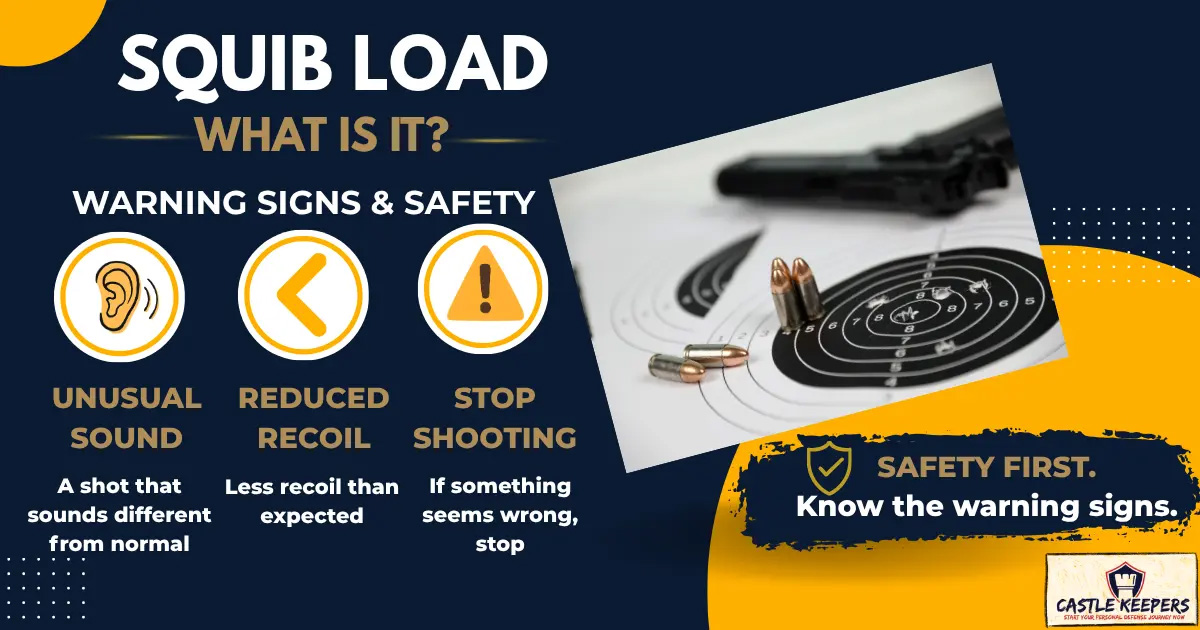
A squib load may not announce itself in exactly the same way every time. That is why shooters should pay attention to changes in the normal sound and feel of their firearm. It is a type of ammunition-related malfunction that may not be immediately obvious. Recognizing unusual sounds, recoil, or firearm behavior can help a shooter identify that something may be wrong.
An Unusually Quiet Shot
A shot that sounds noticeably different or much quieter than expected deserves attention. A squib load can produce substantially lower-than-normal sound and projectile velocity.
Less Recoil Than Expected
You may notice that the firearm feels different when fired. A sudden change in recoil does not automatically mean a squib load, but it is a good reason to stop and investigate rather than assuming everything is normal.
The Firearm Does Not Operate Normally
A firearm that behaves differently after a shot should not simply be forced back into normal operation. An unusual cycling problem, unexpected sound, or other abnormal behavior should be treated seriously.
Something Simply Feels Wrong
This is one of the most important signs. Experienced shooters often develop a sense of what a normal shot sounds and feels like. Beginners may not have that experience yet, which is one reason instruction and supervised practice can be valuable.
When in doubt, stop.
What Should You Do If You Suspect a Squib Load?
This is the part that matters most.
If you believe you may have experienced a squib load, do not fire another round to find out what happens.
Keep the firearm pointed in a safe direction and keep your finger away from the trigger. If you are at a shooting range, notify the range officer or qualified instructor and follow the range's safety procedures.
ATF firearms-handling guidance states that if a squib load is heard, the shooter should keep the barrel pointed down range until the firearm is checked and made safe.
Do not attempt to solve an uncertain firearm problem by continuing to shoot.
And if you are not qualified to inspect or clear the firearm safely, don't guess. Have the firearm evaluated by a qualified professional.
This is also where good firearms training makes a difference. Knowing when to stop can be just as important as knowing when to shoot.
How Firearms Training Can Help
A good firearms class is not only about accuracy.
Responsible training should also help students understand safe firearm handling, recognize unusual situations, and develop good habits.
Castle Keepers provides instructor-led firearms training for beginners and experienced shooters across Maryland, Virginia, and Washington, D.C. Its training programs include safety-focused instruction and hands-on practice.
For people who already own a firearm and want to become more comfortable with safe range practice, Castle Keepers also offers structured gun shooting practice in Maryland focused on safety, accuracy, and developing better shooting habits
The goal isn't simply to put more rounds downrange. It is to develop the awareness and habits that help you make safer decisions when something unexpected happens.
Why Beginners Should Learn to Recognize Abnormal Shots
Someone who is new to shooting may not yet know what a normal shot should sound or feel like.
That's one reason beginner-friendly instruction can be valuable.
Instead of learning only how to stand, grip the firearm, aim, and fire, students should also learn the importance of paying attention to what happens during each shot.
A safe approach is:
Something sounds different → stop.
Something feels different → stop.
The firearm behaves differently → stop.
You don't need to be an experienced shooter to follow that rule.
Frequently Asked Questions About Squib Loads
What is a squib load?
A squib load is a cartridge or shotshell that produces substantially less projectile velocity and sound than normal. In some cases, the projectile or wad may remain inside the firearm's bore.
How can you tell if you have a squib load?
There may be an unusually quiet report, reduced recoil, or other abnormal firearm behavior. However, there is no single sign that confirms every squib load. If a shot sounds or feels significantly different, stop shooting and have the firearm checked.
Are squib loads dangerous?
They can be. The primary concern is that a projectile may remain in the barrel. Firing another round with an obstruction present can create a dangerous pressure situation and may cause firearm damage or injury.
What should I do if I think I had a squib load?
Stop shooting immediately. Keep the firearm pointed in a safe direction and keep your finger away from the trigger. If you're at a range, notify the range officer or qualified instructor. Have the firearm checked and made safe before continuing. ATF guidance specifically advises keeping the barrel pointed downrange if a squib load is heard until the firearm is checked and made safe.
Can beginners learn about firearm malfunctions?
Yes. Learning how to recognize abnormal firearm behavior is an important part of developing safe shooting habits. A qualified instructor can help beginners understand safe handling and what to do when something does not seem right.
Is a squib load intentional?
A squib load is not something a shooter should intentionally rely on or treat as a normal type of ammunition. The term describes a cartridge or shotshell that produces substantially less projectile velocity and sound than normal and may leave a projectile or wad in the bore.
Is there another term for a squib load?
A squib load is commonly described as an underpowered or low-powered ammunition load. The important issue is not the terminology but recognizing when a cartridge produces an unusually weak report or reduced performance and stopping to have the firearm checked.
Final Thoughts
A squib load is a good example of why responsible firearm ownership involves more than simply pulling the trigger.
Pay attention to your firearm. Pay attention to the sound and feel of each shot. And if something seems unusual, stop instead of assuming everything is fine.
You don't need to figure out the problem by continuing to shoot.
Safety comes first.
If you are looking to build better firearm-handling habits or improve your skills under qualified instruction, Castle Keepers offers firearms training for beginners and experienced shooters throughout Maryland, Virginia, and Washington, D.C.